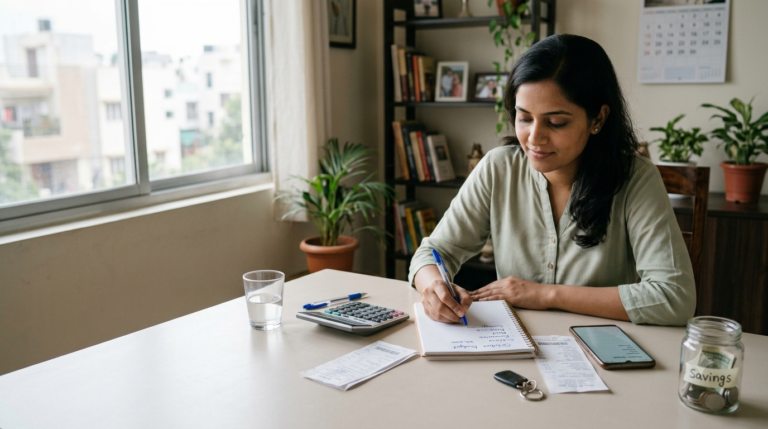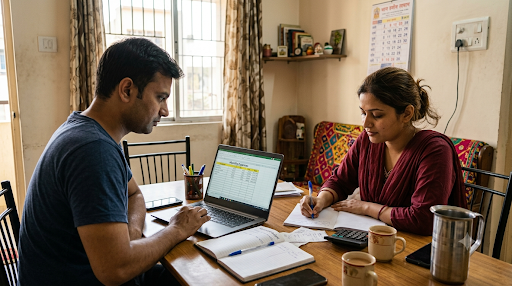
If you earn ₹25,000 a month, saving money may seem difficult after paying rent, groceries, transport, bills and other everyday expenses. But even on a modest income, a structured budget can help you create room for savings.
If you are wondering how to save money on 25000 salary, start with a realistic target rather than trying to follow a budget designed for someone earning much more.
For example, if you can consistently save ₹2,500 each month, that adds up to ₹30,000 over 12 months before considering any interest or investment returns. If ₹2,500 is currently unrealistic, starting with ₹1,000 is still progress.
The goal is simple: control where your salary goes before your expenses decide for you.
Table of Contents
How to Save Money on 25000 Salary: Start With a Realistic Budget
A budget is simply a plan for your future income and expenses. The Reserve Bank of India’s financial education material explains that budgeting can help people control expenses and save more.
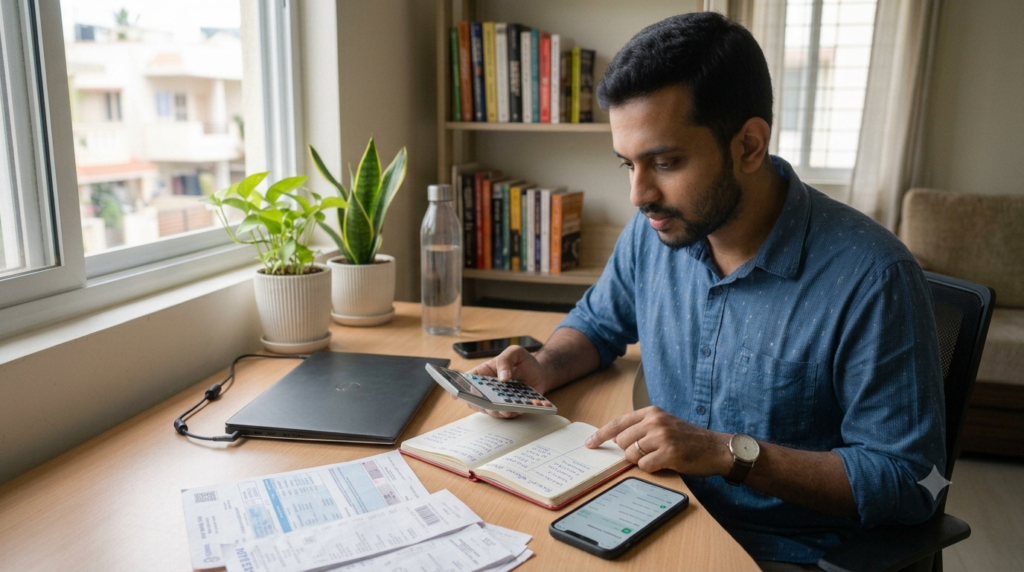
For a ₹25,000 monthly take-home salary, you could begin with a budget like this:
| Expense Category | Suggested Amount |
|---|---|
| Rent / Accommodation | ₹7,000 |
| Food & Groceries | ₹4,000 |
| Transport | ₹2,500 |
| Utilities & Mobile | ₹1,500 |
| Family / Personal Expenses | ₹2,500 |
| Emergency Fund | ₹2,000 |
| Long-Term Savings / Investments | ₹2,500 |
| Entertainment / Miscellaneous | ₹2,000 |
| Buffer | ₹1,000 |
| Total | ₹25,000 |
This is an illustrative budget, not a universal rule. Someone living with family may spend much less on housing, while someone renting in an expensive city may need considerably more.
What matters is that your total spending stays within ₹25,000 and that saving has its own place in the budget.
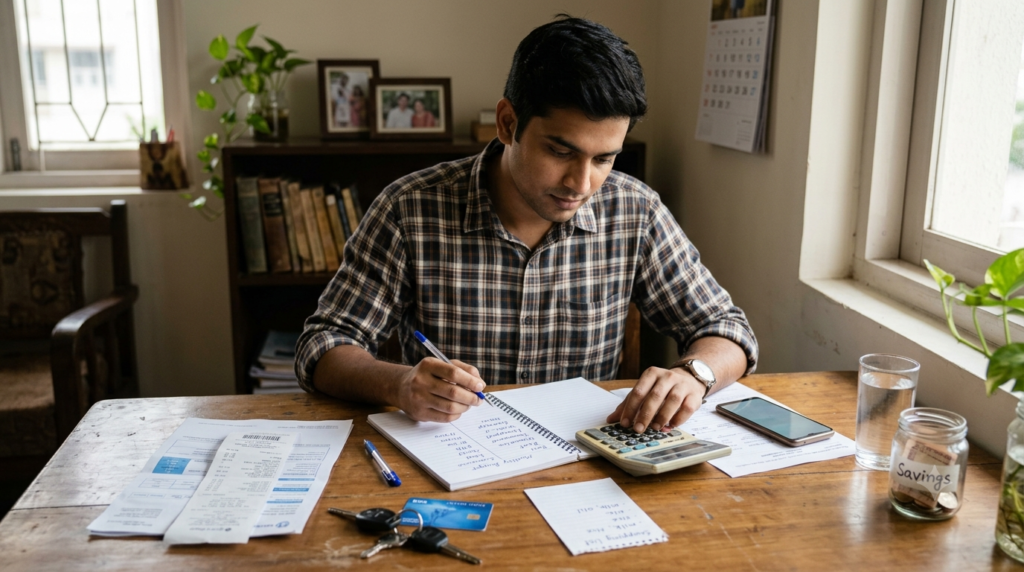
1. Save Money as Soon as Your Salary Arrives
One of the easiest mistakes to make is:
Salary → Spend → Save whatever remains
Try reversing the order:
Salary → Save → Spend what remains
The RBI’s financial education material has recommended separating savings from day-to-day spending and setting money aside when income arrives.
Suppose your salary is credited on the first of every month.
You could transfer ₹2,000 to ₹2,500 into a separate savings account soon after receiving your salary. You then build the rest of your monthly budget around the remaining amount.
This approach reduces the temptation to treat savings as spare money available for everyday spending.
If ₹2,500 feels impossible, begin with ₹1,000.
The habit matters more than starting with an impressive number.

2. Keep Housing Costs Under Control
Housing can consume a large part of a ₹25,000 salary.
If you pay ₹10,000 or ₹12,000 in rent, you may have little room left for food, transport, bills, emergencies and savings.
Where practical, consider options such as:
- sharing accommodation
- choosing a less expensive locality
- living closer to work if it meaningfully reduces transport costs
- negotiating rent when renewing
- living with family temporarily when appropriate
Do not choose accommodation purely because it has the lowest rent. Safety, commute time and essential living conditions also matter.
The objective is to find a sustainable balance between housing costs and quality of life.

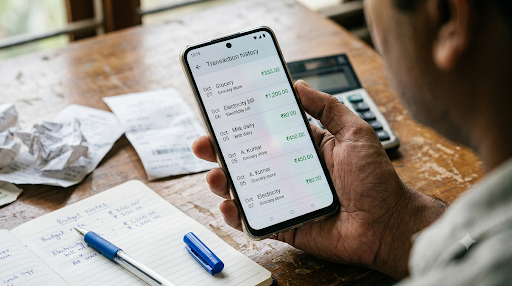
3. Track Every Expense for One Month
You cannot fix spending that you cannot see.
For 30 days, record your expenses.
That includes small purchases such as:
- tea and snacks
- food delivery
- auto or cab fares
- subscriptions
- online shopping
- impulse purchases
- entertainment
- convenience fees
RBI financial education guidance recommends maintaining a financial diary to track income and expenses over a period such as a week or month.
You do not need a complicated spreadsheet.
A notes app, expense tracker or simple notebook can work.
At the end of the month, separate expenses into three groups:
Essential: Rent, basic groceries, electricity, necessary transport and other unavoidable needs.
Reducible: Eating out, entertainment, subscriptions, frequent convenience spending and optional shopping.
Unnecessary: Purchases you barely use or would not buy again.
Start by cutting the third category.
Then examine the second.
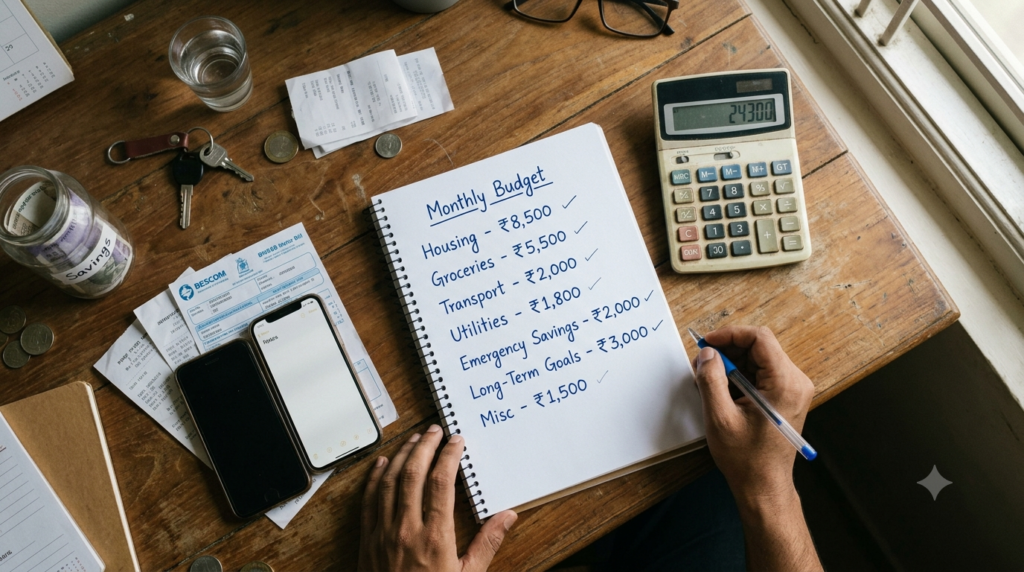
4. Build an Emergency Fund Gradually
Unexpected expenses can destroy a carefully planned monthly budget.
A medical bill, urgent journey, temporary loss of income or essential repair can force you to borrow if you have no financial cushion.
That is why emergency savings should be treated separately from money meant for shopping, holidays or routine spending.
You do not have to build a large emergency fund immediately.
You could progress in stages:
First target: ₹5,000
Then:
₹10,000 → ₹25,000 → one month of essential expenses → gradually build further
SEBI’s financial education material discusses building savings sufficient to cover several months of living expenses as an example of a longer-term financial objective.
Your appropriate emergency-fund target will depend on factors such as job stability, dependants, insurance, debt and essential monthly costs.
Keep emergency money reasonably accessible. The primary purpose of this fund is financial protection, not chasing the highest possible return.

5. Reduce Food Spending Without Sacrificing Nutrition
Food is essential. Frequent convenience spending is not.
A person earning ₹25,000 can lose a surprising amount of money through repeated small food purchases.
For example, buying an extra ₹100 of snacks, drinks or delivered food on 20 days in a month costs:
₹100 × 20 = ₹2,000
That is ₹24,000 over 12 months if the same pattern continues.
This does not mean you should eliminate every enjoyable purchase.
Instead, control frequency.
Practical options include:
- carrying lunch from home when possible
- planning groceries before shopping
- comparing unit prices
- reducing food waste
- limiting delivery orders
- carrying water and basic snacks
- deciding an eating-out budget in advance
Small recurring expenses deserve attention because they repeat.
6. Be Careful With EMIs and Consumer Debt
An EMI makes an expensive purchase look smaller because you see the monthly payment rather than the total obligation.
For someone earning ₹25,000, multiple EMIs can quickly reduce monthly flexibility.
Before taking a new EMI, ask:
Do I need this now?
Can I save for it first?
What is the total amount I will repay?
Will this EMI make it difficult to save or handle an emergency?
Borrowing is not automatically bad. Loans can serve legitimate purposes.
The problem begins when too much future salary is already committed before it reaches your account.
Be especially cautious about borrowing for discretionary purchases that you could postpone.
7. Increase Savings Whenever Your Income Increases
Cutting expenses has a limit.
Income growth can eventually become the more powerful part of your financial plan.
If your salary rises from ₹25,000 to ₹28,000, avoid automatically increasing your lifestyle by the entire ₹3,000.
You might decide that part of every raise goes directly toward savings, investing, debt reduction or another financial goal.
You can also explore ways to improve earning potential through:
- job-relevant skills
- certifications
- freelancing
- overtime where appropriate
- part-time work
- switching roles when a better opportunity is available
Your first ₹1,000 of monthly savings may come from cutting unnecessary spending.
Your next ₹5,000 may eventually come from earning more.
What If You Cannot Save ₹2,500 Every Month?
Do not abandon budgeting simply because a 10% savings target is currently too difficult.
Suppose you can save only ₹1,000 per month.
That still equals:
₹1,000 × 12 = ₹12,000 a year
If you later increase it to ₹1,500:
₹1,500 × 12 = ₹18,000 a year
At ₹2,500:
₹2,500 × 12 = ₹30,000 a year
These calculations exclude any interest or investment returns.
Consistency is more useful than setting an unrealistic target and quitting after two months.
Example ₹25,000 Salary Budget for Someone Living With Family
If you live with family and do not pay full market rent, your budget could look very different.
| Category | Example Amount |
|---|---|
| Household Contribution | ₹5,000 |
| Food / Personal Groceries | ₹2,500 |
| Transport | ₹2,500 |
| Mobile / Utilities | ₹1,000 |
| Personal Expenses | ₹2,000 |
| Emergency Savings | ₹3,000 |
| Long-Term Savings / Investments | ₹5,000 |
| Entertainment | ₹1,500 |
| Buffer | ₹2,500 |
| Total | ₹25,000 |
In this example, total savings are ₹8,000 per month between emergency savings and longer-term savings.
That would equal ₹96,000 in contributions over 12 months, excluding any returns.
The key reason this budget allows a higher savings rate is lower housing expenditure.
Do not compare your savings percentage blindly with someone whose living situation is completely different.
Example ₹25,000 Salary Budget When Paying Rent
A renter might instead use:
| Category | Example Amount |
|---|---|
| Rent | ₹7,000 |
| Food & Groceries | ₹4,000 |
| Transport | ₹2,500 |
| Utilities / Mobile | ₹1,500 |
| Personal / Household | ₹2,000 |
| Emergency Savings | ₹2,000 |
| Long-Term Savings | ₹2,000 |
| Entertainment | ₹1,500 |
| Buffer | ₹2,500 |
| Total | ₹25,000 |
Here, ₹4,000 goes toward emergency and longer-term savings each month.
That represents ₹48,000 in contributions over one year if maintained consistently.
Again, these numbers are examples. Adjust them according to your actual rent, commute, family responsibilities, debt and other essential costs.
Common Money Mistakes on a ₹25,000 Salary
Spending First and Saving Later
If saving depends on having money left on the last day of the month, it is easy to save nothing.
Create a savings allocation near the beginning of the month instead.
Taking Too Many EMIs
Every EMI reduces the income available for future expenses.
Review existing commitments before adding another one.
Ignoring Small Expenses
A ₹50 or ₹100 purchase looks insignificant in isolation.
Repeated frequently, it can become a meaningful monthly expense.
Increasing Lifestyle With Every Raise
A salary increase should improve your finances, not merely increase your spending.
Consider directing part of every raise toward your financial goals.
Using Emergency Savings for Non-Emergencies
A festival sale, new phone or holiday is normally a planned expense—not an emergency.
Create separate savings goals for predictable purchases.
A Simple Salary-Day Routine
You can make budgeting easier by following the same routine every month.
When your ₹25,000 salary arrives:
Step 1: Transfer your planned savings.
Step 2: Pay rent and essential bills.
Step 3: Set aside money for groceries and transport.
Step 4: Reserve a fixed amount for discretionary spending.
Step 5: Keep a small buffer for unexpected minor expenses.
Step 6: Track spending during the month.
Step 7: Review your actual spending before the next salary arrives.
After two or three months, you will have real data about your spending habits.
You can then adjust the budget instead of guessing.
Final Takeaway
Learning how to save money on 25000 salary is less about finding one dramatic money-saving trick and more about creating a repeatable system.
Start with four priorities:
Track your spending.
Save near the beginning of the month.
Control recurring expenses.
Build an emergency fund gradually.
If you can save ₹2,500 each month, you will contribute ₹30,000 over a year. If you can save only ₹1,000 today, start there and increase it when your financial situation improves.
A ₹25,000 salary may limit how quickly you can build savings, but it does not prevent you from building better financial habits.
The best budget is not the one with the most aggressive savings percentage.
It is the one you can realistically follow month after month.
Frequently Asked Questions
How much should I save from a ₹25,000 salary?
There is no single percentage that works for everyone. If possible, ₹2,500 per month is a useful starting example because it equals ₹30,000 in contributions over a year. If that is unaffordable, start with ₹500 or ₹1,000 and increase the amount as your finances improve.
Is ₹25,000 salary enough to save money?
It can be, depending on your rent, location, family responsibilities, debt and other essential expenses. Someone living with family may be able to save considerably more than someone paying rent independently.
How can I save ₹5,000 per month from a ₹25,000 salary?
Saving ₹5,000 means setting aside 20% of your salary. This may require low housing costs, careful control of food and transport expenses, limited discretionary spending and little high-cost debt. Do not force a ₹5,000 target if doing so prevents you from meeting essential expenses.
Should I save or invest first?
Before focusing entirely on long-term investing, consider maintaining accessible emergency savings for unexpected expenses. Your investment choices should then reflect your goals, time horizon, financial position and ability to take risk.
Where should I keep my emergency fund?
Emergency money should generally be kept somewhere reasonably safe and accessible because its primary purpose is to cover unexpected essential expenses. Avoid putting all emergency money into an asset that may be difficult to access quickly or whose value can fluctuate significantly when you need it.