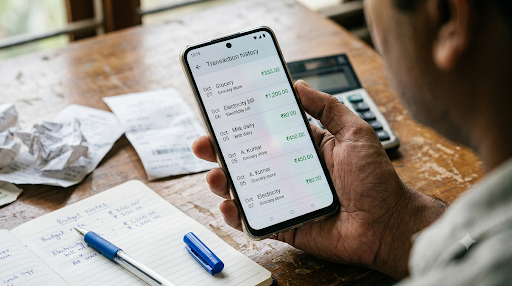

Your CIBIL score after missing EMI payments can decline because repayment history is an important part of your credit profile. However, one missed EMI does not mean your credit score is permanently damaged.
The first step is to clear the overdue payment as soon as possible. After that, make future EMIs on time, keep credit-card utilisation under control, avoid unnecessary loan applications and regularly check your credit report for incorrect information.
Rebuilding your CIBIL score after missing EMI payments takes consistent repayment behaviour rather than a quick fix.
Table of Contents
What Happens to Your CIBIL Score When You Miss an EMI?
A missed EMI can become part of the repayment information supplied by your lender to credit information companies such as TransUnion CIBIL.
A CIBIL Score is a three-digit summary of your credit history ranging from 300 to 900. According to TransUnion CIBIL, the main factors used to calculate the score include payment history, credit utilisation, age of credit and enquiries.
Late payments, missed payments and other delinquencies can negatively affect the score.
However, there is no universal rule stating that one missed EMI will reduce every borrower’s CIBIL score by a particular number of points.
The effect depends on the borrower’s overall credit profile.
For example, a borrower with several years of timely repayments and one isolated late EMI has a different credit history from someone with multiple overdue accounts, high credit-card utilisation and several recent loan applications.
That is why claims such as “one missed EMI always reduces your CIBIL score by 50 points” should be treated cautiously.

Is One Missed EMI Permanent?
No. Missing one EMI does not permanently lock your CIBIL score at a lower level.
Your CIBIL score reflects information in your credit history. Future repayment behaviour therefore matters too.
Paying overdue amounts and building a consistent record of timely payments can help strengthen your credit profile over time.
However, paying the overdue EMI does not mean an accurate historical late-payment record will simply disappear.
CIBIL receives credit information from banks and financial institutions and cannot independently change accurate lender-reported information.
This creates an important distinction.
If you genuinely missed the EMI, concentrate on bringing the account up to date and improving your repayment behaviour afterward.
If you paid the EMI on time but your credit report incorrectly shows a delayed payment, contact the lender and use the credit-report dispute process.
[INTERNAL LINK: How to Read a CIBIL Report in India]

How to Improve Your CIBIL Score After Missing EMI Payments
Improving your CIBIL score after missing EMI payments generally starts with correcting the immediate repayment problem and then building a stronger credit history.
There is no guaranteed shortcut or fixed number of points that every borrower can recover.
Instead, focus on these eight practical steps.
1. Clear the Overdue EMI as Soon as Possible
Your first priority should generally be to bring the affected loan account up to date.
Leaving an EMI unpaid can create further repayment problems, particularly if another instalment becomes due.
If you are unsure how much you need to pay, contact your bank or NBFC and ask for the current overdue amount.
Depending on your loan agreement and lender’s policies, applicable charges may have been added to the overdue amount. Therefore, paying only the original EMI amount may not always be sufficient to regularise the account completely.
After making the payment, retain evidence such as your payment receipt, transaction reference or bank statement.
The objective is simple: clear the overdue amount and resume regular repayment.
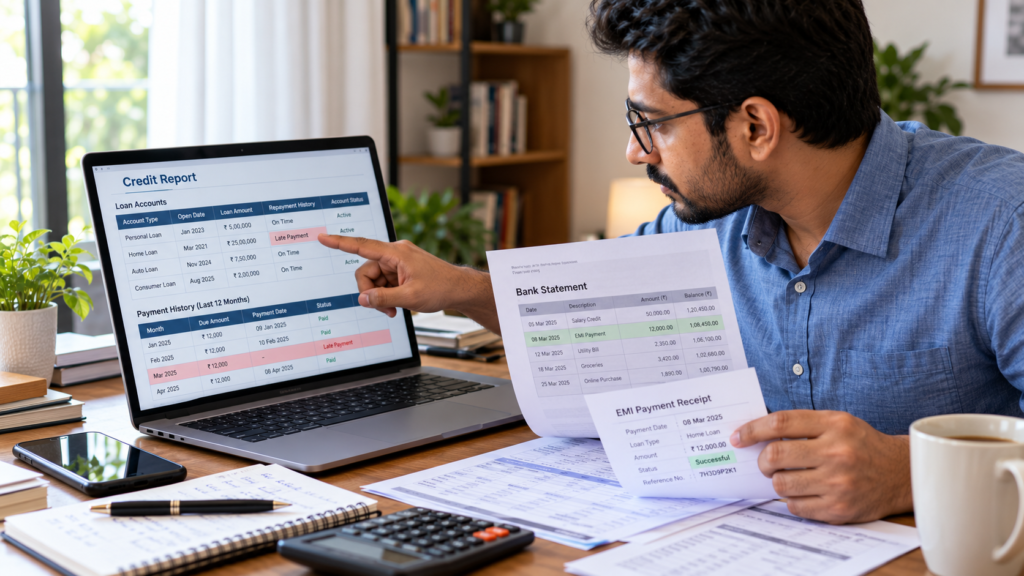
2. Make Every Future EMI on Time
After resolving the overdue payment, consistency becomes especially important.
TransUnion CIBIL identifies payment history as one of the main factors affecting a CIBIL score and advises borrowers to pay EMIs and credit-card bills on time.
A simple repayment system can reduce the possibility of another accidental missed payment.
You can:
- Enable automatic EMI payments where appropriate.
- Keep sufficient money in the repayment account before the due date.
- Set a reminder several days before each EMI.
- Check the account after the scheduled debit.
- Update your lender promptly if your repayment bank account changes.
Autopay can help, but do not assume that activating it guarantees every EMI will be successfully debited.
Insufficient funds, mandate problems or other payment issues can still cause a transaction to fail.
3. Check Your CIBIL Report
Do not automatically assume that a single missed EMI is the only reason your score changed.
Review your credit report carefully.
A CIBIL report can contain your active and inactive loan and credit-card accounts, repayment information, balances and enquiries made by lenders.
Review the affected loan and check details such as:
- Outstanding balance
- Overdue amount
- Repayment history
- Account status
- Recent payment information
- Loan accounts you do not recognise
You should also review your other credit accounts for incorrect information.
TransUnion CIBIL currently states that consumers are entitled to one free CIBIL Score and Report every calendar year under RBI guidelines.
Checking your own CIBIL score does not negatively affect the score.
[EXTERNAL LINK: Official TransUnion CIBIL Free Score and Report]
[INTERNAL LINK: How to Check Your CIBIL Score for Free in India]
4. Allow Time for Your Payment to Be Updated
Your CIBIL score after missing EMI payments may not change immediately after you clear the overdue amount.
The lender first has to report updated credit information, which then needs to be incorporated by the credit information company.
The Reserve Bank of India strengthened credit-information reporting requirements with effect from January 1, 2025.
Credit institutions and credit information companies are required to keep credit information updated on a fortnightly basis — as of the 15th and the last day of each month — or at shorter mutually agreed intervals.
RBI’s directions also require credit institutions to submit the relevant fortnightly information within seven calendar days of the reporting fortnight. Credit information companies are required to ingest accepted information within five calendar days of receiving it.
This means you should not necessarily expect an overdue EMI paid today to appear as updated on your credit report tomorrow.
Allow for the reporting process and continue monitoring your report.
[EXTERNAL LINK: Reserve Bank of India — Frequency of Reporting of Credit Information]
5. Dispute an Incorrect Late-Payment Entry
Suppose you paid your EMI on time but your CIBIL report records the payment as delayed.
That is different from a genuine missed EMI.
If the information is inaccurate, use the appropriate dispute process and contact the lender responsible for reporting the account.
Keep supporting documents such as:
- Bank statements
- EMI receipts
- Transaction reference numbers
- Loan statements
- Lender emails
- Payment acknowledgements
CIBIL cannot independently alter information supplied by a lender. A correction to lender-reported information requires verification through the relevant process.
Do not use the dispute process merely because an accurate missed payment is affecting your score.
The purpose of a dispute is to correct inaccurate information.
[INTERNAL LINK: How to Correct Errors in Your CIBIL Report]
What If a Genuine Correction Takes Too Long?
India’s regulatory framework provides protection for consumers facing delayed correction or updation of credit information.
RBI introduced a compensation framework under which eligible complainants can be entitled to ₹100 per calendar day when a complaint concerning delayed updation or rectification of credit information is not resolved within 30 calendar days, subject to the conditions of the framework.
This provision concerns eligible complaints involving delayed correction or updation.
It is not a method for deleting an accurate missed EMI.
[EXTERNAL LINK: Reserve Bank of India — Credit Information Customer Compensation Framework]
6. Keep Credit-Card Utilisation Under Control
Your repayment history is not the only factor influencing your CIBIL score.
Credit utilisation also matters.
Credit utilisation broadly describes how much of your available revolving credit you are using.
TransUnion CIBIL states that higher credit utilisation can indicate a greater repayment burden and may negatively affect your credit profile.
For example, regularly carrying balances close to your available credit-card limits may make your overall credit position look more stretched.
When rebuilding your CIBIL score after missing EMI payments, avoid unnecessarily pushing card balances towards their limits.
If you already carry substantial credit-card balances, reducing those balances where financially practical may help strengthen your overall credit profile.
The goal should be sustainable debt management rather than trying to manipulate your score.
7. Avoid Multiple Loan Applications
A lower credit score can tempt borrowers to apply to several banks, NBFCs or lending platforms in the hope that one will approve their application.
That strategy can create another problem.
When you formally apply for credit, lenders may check your credit report.
TransUnion CIBIL says that frequent credit applications and multiple enquiries over a short period can negatively affect your score.
If you do not urgently need additional borrowing, concentrating on your existing repayment obligations may be more useful than repeatedly applying for new credit.
Remember that checking your own CIBIL score is different from a lender making an enquiry during a credit application.
Your own CIBIL score check does not lower the score.
8. Monitor Joint and Guaranteed Loans
Your individual loan is not necessarily the only account that can affect your credit profile.
Pay attention to co-signed, guaranteed and jointly held credit accounts.
CIBIL advises consumers to monitor these accounts because they can be liable for missed payments associated with them.
If you are rebuilding your credit after a missed EMI, review all relevant credit accounts rather than concentrating only on one loan.
Good repayment behaviour on one account may not fully address the problem if another jointly held account continues to accumulate overdue payments.
How Long Does CIBIL Score Recovery After Missing EMI Take?
There is no guaranteed recovery period.
Be cautious about advertisements making promises such as:
“Increase your CIBIL score by 100 points in 30 days.”
Your credit profile contains more information than one missed EMI.
Repayment history, credit utilisation, age of credit, existing balances and credit enquiries can all contribute to the overall picture.
Consider two borrowers.
The first has several years of timely repayments and accidentally misses one EMI.
The second has multiple overdue accounts, high revolving balances and several recent loan applications.
Both may have missed an EMI, but their overall credit profiles are substantially different.
Their subsequent score movements therefore do not have to be identical.
A more useful approach is to think of recovery as a process:
Clear overdue dues → Pay future EMIs on time → Manage existing debt → Limit unnecessary applications → Monitor your credit report.
Consistency matters more than searching for a guaranteed recovery date.
Should You Take a New Loan to Improve Your CIBIL Score?
Do not take unnecessary debt simply because someone claims that a new loan will quickly repair your credit score.
Every new loan creates a real financial obligation.
A formal application may also generate a lender enquiry on your credit report.
If you already have active credit accounts, consistently managing those accounts may allow you to establish better repayment behaviour without taking on debt solely for credit-score purposes.
There may be legitimate reasons to borrow money.
But the primary reason for a new loan should be a genuine financial requirement rather than an attempt to manufacture a quick CIBIL-score increase.
[INTERNAL LINK: Does Taking a New Loan Improve Your CIBIL Score?]
Can You Pay Someone to Increase Your CIBIL Score?
Be cautious about anyone promising an instant or guaranteed CIBIL-score increase in exchange for money.
TransUnion CIBIL states that consumers are not required to pay a fee for improving their CIBIL score, rectifying discrepancies or updating credit information.
If information in your report is incorrect, use the legitimate lender and credit-bureau dispute process.
If the missed EMI is accurate, concentrate on responsible repayment behaviour rather than trying to erase legitimate credit history.
Missed EMI vs Incorrect Late-Payment Entry
A genuine missed payment and an incorrect credit-report entry require different responses.
If you genuinely missed an EMI, clear the overdue amount and rebuild through timely repayments.
If you paid on time but your report shows a late payment, contact the lender and dispute the inaccurate information.
If you recently cleared the overdue amount but your report has not changed yet, allow for the lender and credit bureau reporting cycle.
If you discover an unfamiliar credit account, contact the relevant lender and initiate the appropriate dispute process.
If several accounts are overdue, focus on bringing those accounts up to date and speak with the relevant lenders where necessary.
What Actually Helps Rebuild Your CIBIL Score?
Improving your CIBIL score after missing EMI payments is generally less complicated than many credit-repair advertisements suggest.
Focus on the fundamentals.
Pay overdue amounts.
Make future EMIs and credit-card payments on time.
Keep credit utilisation under control.
Avoid unnecessary credit applications.
Monitor jointly held and guaranteed accounts.
Review your credit report regularly for inaccurate information.
Most importantly, avoid looking for shortcuts.
A healthier credit profile is generally built through consistent financial behaviour over time.
Conclusion
A CIBIL score after missing EMI payments can be affected because repayment history is an important component of your credit profile. But one missed payment does not mean your credit is permanently damaged.
Start by clearing the overdue amount and preventing another missed payment. Then maintain timely EMIs, manage credit-card utilisation, avoid unnecessary loan applications and review your credit report regularly.
If the late payment shown in your report is incorrect, use the lender and credit-bureau dispute process rather than accepting inaccurate information.
There is no guaranteed number of days or points for recovery. The practical objective is to build a consistent pattern of responsible credit management over time.