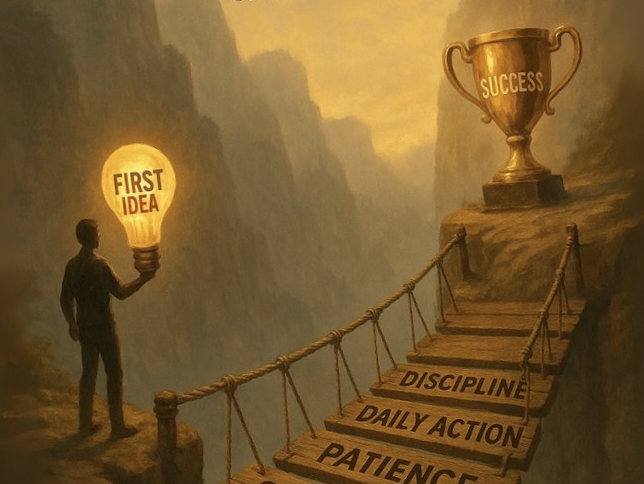

How to Find Benefits in Any Kind of Thinking Young minds today face constant pressure: grades, jobs, social media, relationships, and the fear of “not doing enough.” In the middle of all this, one simple shift can protect your mental energy and multiply your results: learning how to find benefits in any kind of thinking.
This article will show you how to:
- Turn negative thoughts into action‑oriented benefits,
- Spot advantages even in failure and confusion,
- Use “benefit‑searching” as a mental habit so it becomes automatic,
- Apply this skill to studies, relationships, career choices, and self‑growth.
By the end, you’ll see benefits not as something you “hope for” but as something you actively design and extract from every situation.
Why “finding benefits” is a superpower for youth
Most people react to thoughts passively:
- “I’m lazy” → feel bad.
- “I failed that exam” → give up.
- “No one listens to me” → isolate.
But when you train yourself to ask one question—
“What benefit can I get from this thought or situation?”—
you switch from victim to architect.
1. Benefits rewire your brain over time
- Every time you consciously reframe a thought into a benefit, you strengthen positive neural pathways.
- You start noticing solutions, lessons, and opportunities instead of “problems.”
- This is essentially cognitive reframing—a proven technique used in therapy and performance coaching.gvi
2. Benefits reduce stress and overthinking
- Instead of “I’m wasting time,” you can think:
“This confusion is forcing me to research deeper and build real understanding.” - Over time, you stop fighting your thoughts and start filtering them for value.
3. Benefits help youth make better decisions
- A benefit‑focused mindset helps you answer:
- “What will I gain if I study this way?”
- “What will I learn if this relationship ends?”
- When you see hidden benefits, you’re less likely to avoid challenges out of fear.
How to find benefits in any kind of thinking (step‑by‑step)
Think of this as a mental toolkit you can pull out anytime your mind feels stuck.
1. First, label the thought clearly
Before you find benefits, know what you’re actually thinking.
Ask yourself:
- What is this thought?
- Is it about myself, others, or a situation?
- What emotion is it triggering (fear, shame, anger, boredom)?
Examples:
- “I’ll never get a good job.” → fear of failure
- “I’m always overthinking.” → self‑criticism
- “Nothing is going right.” → helplessness
Action:
Write down 3–5 negative thoughts you had today. Be honest, not judgmental.
2. Turn “problem” language into “benefit” language
Most youth think in problem‑only language like:
“I’m stuck.”
“I’m confused.”
“I’m scared.”
Rewrite each problem as a benefit‑question:
| Problem language | Benefit‑question language |
|---|---|
| “I’m stuck.” | “What benefit can I get from being stuck?” |
| “I’m confused.” | “What benefit can confusion bring me?” |
| “I’m scared of failure.” | “What benefit can fear teach me?” |
Now every negative thought becomes a search prompt for benefits.
3. Ask: “What is this teaching me?”
For any thought, ask:
- What is this teaching me about myself?
- What is this teaching me about the world?
Examples:
- Thought: “I’m always procrastinating.”
- Benefit: “This is teaching me that I need a better system, not more guilt.”
- Thought: “I feel lonely.”
- Benefit: “This is teaching me which kinds of relationships I truly need.”
Practice:
Pick one thought from your list and write 3 lessons (benefits) it’s showing you.
4. Ask: “What can this help me avoid in the future?”
Every negative thought carries preventive value.
- “I’m scared of public speaking” →
- Benefit: “This fear is warning me to practice early so I don’t embarrass myself later.”
- “I hate this job” →
- Benefit: “This helps me avoid wasting years in a career that doesn’t match me.”
Exercise:
For one unpleasant thought, write down 3 things you now know enough to avoid in future.
5. Ask: “What small action can this push me to take?”
Thoughts become valuable when they move you. Look for:
- One tiny action you can do today.
- One long‑term habit you can start building.
Examples:
- Thought: “I feel lost after college.”
- Benefit: “This feeling is pushing me to explore internships instead of waiting for a perfect plan.”
- Thought: “I overthink every decision.”
- Benefit: “This is pushing me to create a decision‑rule: ‘If I’m unsure, I’ll try for 7 days and then review.’”
10 universal ways to find benefits in any kind of thinking
You can apply these 10 “rules” to any thought, anytime.
1. If the thought is negative, find the “anti‑warning”
Negative thoughts often act as internal alarms. Instead of silencing them, decode the message.
- “I’m scared of the future” → benefit:
“This is forcing me to plan instead of drifting.” - “I hate my routine” → benefit:
“This is telling me I need to redesign my daily structure.”
Key mindset:
Every truly unhelpful thought is there to be replaced.
Every partially helpful thought is there to be used as a signal.
2. If the thought is repetitive, treat it as data
Overthinking and rumination are not signs of “weakness.” They’re signs that your brain is collecting data.
- “I keep thinking about that fight” → benefit:
“My brain is highlighting a boundary I need to set.” - “I can’t stop thinking about my grades” → benefit:
“This shows how much I care and how to prioritize my study environment.”
Action:
When a thought repeats, write it down and label it:
“This is my brain’s data collection phase.”
3. If the thought is shameful, turn it into a course‑correction
Shameful thoughts hurt, but they point to values you still care about.
- “I lied to my friend” → benefit:
“This shame proves integrity matters to me. Now I can repair the relationship.” - “I wasted the whole day on my phone” → benefit:
“This guilt shows I want to use my time better. Next time I’ll set a 2‑hour limit.”
Principle:
Benefits live on the other side of accountability, not denial.
4. If the thought is about failure, focus on feedback
Youth often fear failure because they see only loss.
But failure can give the cleanest benefits: unfiltered feedback.
- “I failed the exam” → benefits:
- I know which topics I weak in.
- I know which study methods don’t work for me.
- I now have a stronger reason to prepare earlier next time.
Reframe:
“Failure is not the opposite of success; it’s the opposite of learning nothing.”
5. If the thought is about comparison, uncover your desire
Comparing yourself to others usually means:
- “I want that too,” or
- “I’m scared I’ll never have that.”
Turn comparison into clarification:
- “He has a better job than me” → benefit:
“This comparison is revealing my real career goals.” - “She seems more confident” → benefit:
“This is showing me the exact quality I want to build.”
Benefit‑phrase to memorize:
“When I compare, I’m actually auto‑diagnosing my desires.”
6. If the thought is about money, trigger a plan
Money‑related thoughts can feel heavy, but they often push you toward financial awareness.
- “I don’t have enough money” → benefit:
“This is forcing me to learn budgeting, side‑hustles, or new skills.” - “I’m embarrassed about my financial situation” → benefit:
“This shame is pushing me to seek honest guidance, not avoidance.”
Youth who turn money‑thoughts into benefit‑searching build financial literacy years earlier than peers.
7. If the thought is about relationships, expose your needs
Relationship thoughts—about parents, friends, crushes, exes—carry emotional blueprints.
- “No one understands me” → benefit:
“This thought is showing me I need deeper communication skills.” - “I always get hurt in relationships” → benefit:
“This pattern is teaching me to set boundaries and choose healthier people.”
Every relationship‑related thought can be mined for self‑knowledge benefits.
8. If the thought is about identity, invite self‑redefinition
Youth often struggle with questions like:
- “Who am I?”
- “Am I enough?”
Benefits come when you turn identity doubt into curiosity:
- “I’m not sure who I really am” → benefit:
“This uncertainty is giving me permission to experiment and explore.” - “I’m scared of becoming like my parents” → benefit:
“This fear is making me consciously decide what traits to keep and reject.”
Self‑inquiry benefits:
Identity questions are not flaws—they’re free self‑development sessions.
9. If the thought is about anxiety, install a safety system
Anxiety thoughts often feel useless, but they can train your risk‑assessment skills.
- “What if something bad happens?” → benefit:
“This is forcing me to plan worst‑case scenarios and feel safer.” - “What if I make the wrong choice?” → benefit:
“This is pushing me to collect more information and create backup plans.”
Instead of “I’m too anxious,” try:
“This anxiety is paying my future‑self insurance.”
10. If the thought is about boredom, unlock creativity
Boredom is one of the most misunderstood “negative” thoughts.
- “I’m bored with everything” → benefit:
“This is a signal that I need to try something new, not just more of the same.” - “Nothing feels exciting” → benefit:
“This is pushing me to design my own challenges, not wait for external entertainment.”
Youth who treat boredom as a creative trigger often discover new skills, hobbies, and career paths.
Practical benefit‑finding frameworks for youth
Below are 3 ready‑to‑use frameworks you can apply to any thought in under 2 minutes.
Framework 1: The 3‑Benefit Method
Whenever you catch a negative thought, ask:
- What is this teaching me?
- What can this help me avoid in the future?
- What tiny action can this push me to take today?
Example:
- Thought: “I’m scared of starting a YouTube channel.”
- It teaches me that I care about my image and how people see me.
- It helps me avoid going into it completely unprepared.
- It pushes me to record one short video and delete it if I hate it.
Reuse this framework every time a new thought appears.
Framework 2: The “From‑To” Benefit Map
Convert From → To:
| From (original thought) | To (benefit version) |
|---|---|
| “I’m scared of failure.” | “This fear is training me to plan ahead.” |
| “I’m overthinking.” | “Overthinking is turning into detailed planning.” |
| “I’m jealous.” | “Jealousy is revealing my true goals.” |
Practice:
Create your own “From‑To” table with 5–10 of your common thoughts.
Framework 3: The “Future‑You” Benefit Lens
Ask:
- “If Future‑Me looks back at this moment, what benefit will they see in this thought?”
Examples:
- “If I’m doubting this relationship, Future‑Me might see the benefit of early clarity.”
- “If I’m scared of changing careers, Future‑Me might see the benefit of courage.”
This shifts your perspective from present discomfort to long‑term benefit.
Finding benefits in major life areas (for youth)
Now let’s apply the “benefits mindset” to key life areas where youth struggle most.
1. Studies and exams
Students often feel:
- “Studying is boring.”
- “Exams are unfair.”
- “I’ll never remember everything.”
Benefits‑focused reframes:
- “Studying is boring” →
- Benefit: “This boredom is pushing me to experiment with active learning—videos, quizzes, discussions.”
- “Exams are stressful” →
- Benefit: “This pressure is training me to manage time and regulate stress under deadlines.”
- “I’m scared of low marks” →
- Benefit: “This fear is motivating me to analyze past papers and build a proper study schedule.”
Practical tip:
Before every exam, write:
“What 3 benefits can I take from this exam, even if I fail?”
2. Career and internships
Youth often worry:
- “I don’t know what to do.”
- “I have no experience.”
- “I’ll never get a good job.”
Benefits you can extract:
- “I don’t know what to do” →
- Benefit: “This uncertainty is forcing me to explore different fields instead of jumping into one blindly.”
- “I have no experience” →
- Benefit: “This is pushing me to start small: freelancing, mini‑projects, or volunteering.”
- “I’m scared of interviews” →
- Benefit: “This fear is motivating me to practice mock interviews and build confidence.”
Action idea:
For every “I don’t know what to do” thought, add:
“So my benefit is: I get to experiment without pressure.”
3. Social media and self‑image
Social media triggers:
- “No one likes my posts.”
- “I’m not as pretty as them.”
- “Everyone is doing better than me.”
Benefits you can find:
- “No one likes my posts” →
- Benefit: “This is teaching me to improve my content and audience understanding.”
- “I’m not as pretty as them” →
- Benefit: “This comparison is helping me discover what real confidence looks like beyond looks.”
- “Everyone is doing better” →
- Benefit: “This is showing me high‑quality examples and inspiring me to create my own path.”
Healthy boundary benefit:
Every time social media makes you feel bad, you also gain clarity about what energy you want to protect.
4. Friends and relationships
Youth often think:
- “My friends don’t care.”
- “I’m always the one listening.”
- “I can’t trust anyone.”
Benefits hidden inside:
- “My friends don’t care” →
- Benefit: “This disappointment is teaching me to choose friends who match my values.”
- “I’m always the one listening” →
- Benefit: “This role is developing my empathy and leadership skills.”
- “I can’t trust anyone” →
- Benefit: “This pain is teaching me to set clear boundaries and pick trustworthy people slowly.”
Every relationship issue can become a benefits‑training ground for emotional intelligence.
5. Family and parental pressure
Common thoughts:
- “My parents don’t understand me.”
- “They only care about grades.”
- “They compare me to others.”
How to find benefits:
- “My parents don’t understand me” →
- Benefit: “This gap is teaching me to communicate my needs clearly.”
- “They only care about grades” →
- Benefit: “This pressure is pushing me to prove my value beyond marks.”
- “They compare me to others” →
- Benefit: “This comparison is helping me define my own success metrics.”
Important:
You don’t need to like the situation. You just need to mine the benefit from it.
6. Mental health and overthinking
Youth think:
- “Why do I overthink everything?”
- “I’m always anxious.”
- “I’m not normal.”
Benefits you can recognize:
- “I overthink everything” →
- Benefit: “This is turning into deep analysis and planning skills.”
- “I’m always anxious” →
- Benefit: “This anxiety is training me to prepare thoroughly and manage stress resilience.”
- “I’m not normal” →
- Benefit: “This feeling is pushing me to seek help, read about psychology, and understand myself better.”
Your mental‑health struggles are not just problems—they’re teachers in disguise.