
Toxic core beliefs are deeply held, negative ideas about oneself, others, or the world that can create emotional pain, limit growth, and sabotage relationships or success. These beliefs often begin in childhood and persist because they feel “just true,” even if they are actually false or distorted.

Common Toxic Core Beliefs.
- “I am not good enough.”
- “I don’t deserve love or happiness.”
- “I am a failure.”
- “Others will always disappoint me.”
- “It’s unsafe to trust people.”
- “My worth depends on my achievements.”
Table of Contents
Toxic Core Beliefs Story.
Arjun lived in a quiet village, feeling invisible amidst the bustle of daily life. Since childhood, he carried the heavy core belief: “I am not good enough.” No matter how hard he worked in school or helped in the fields, this thought echoed in his mind like a shadow.
One evening, he wandered into the forest, seeking peace. There, he found an old monk meditating beneath a golden tree. Drawn by curiosity, Arjun approached and confessed his struggles. The monk listened and handed him a simple gold coin, its surface worn but shining in the sunlight.
“This coin is like you,” said the monk. “It may seem ordinary, but it has value beyond measure. If you look deeper, you’ll discover the gold within.”
Inspired, Arjun began a new habit each day: writing a journal entry about something he did that showed courage, kindness, or effort. At first, the toxic belief still whispered, but slowly, his words painted a different picture. He noticed his strengths and began to see the value in small wins—helping a friend, learning a new skill, offering comfort.
Little by little, Arjun’s identity shifted. He accepted mistakes as learning and replaced the old belief with: “I am growing, I am worthy.” The gold coin remained with him as a reminder—the real treasure was the value he built by changing his beliefs and embracing his true identity.
Years later, people in the village sought his advice, wondering how he became so confident. Arjun smiled and shared the monk’s wisdom, passing the gold coin along to someone ready to see their own inner gold.
This story shows how toxic beliefs can be overcome through daily reflection, affirming one’s values, and embracing personal growth. The greatest change begins from within.
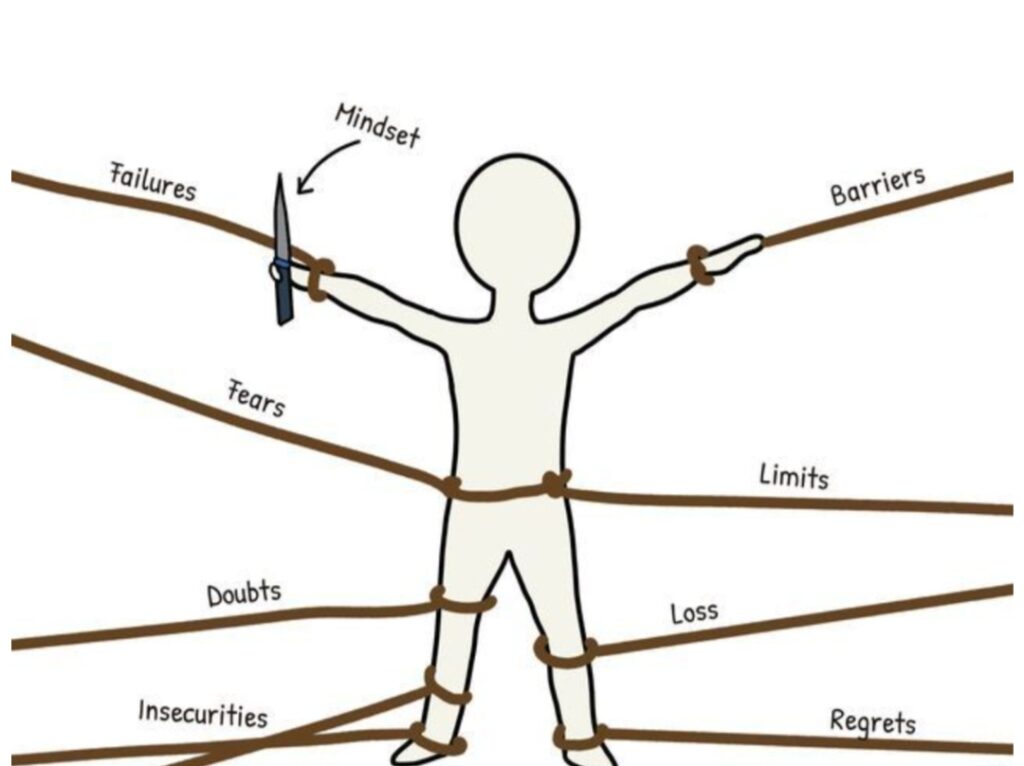
How to replace One Toxic Core Belief.
1 Identify the Belief: Clearly name the toxic belief you want to change—such as “I am not good enough”—by paying attention to recurring negative thoughts and emotional reactions.
2. Explore the Origin: Reflect on where this belief comes from (childhood, trauma, repeated criticism) to gain insight and reduce its unconscious power
3. Challenge the Belief: Collect evidence against the toxic belief and practice questioning its truth whenever it arises. Ask: “Is there real proof this is always true?” or “What would I tell a friend in this situation?”.
4. Choose a Realistic Alternative: Find a healthy replacement belief, making sure it’s accurate and believable for you. For example, replace “I am worthless” with “I am learning and growing every day” or “I am good enough”.
5. Visualize Change: Imagine how your life will feel and look with the new belief. Write or reflect in detail on how your mindset, actions, and relationships might transform
6. Plan Reinforcement Actions: Develop habits to support your new belief. Examples include daily affirmation practice, mirror work, journaling progress, and acting in new ways that back up the healthy belief.
7. Monitor and Adjust: Track your progress over weeks, celebrate small successes, and gently refocus if old patterns re-emerge.
8. Practice Self-Compassion: Accept that setbacks are normal. Be gentle with yourself and persist through discomfort—change takes time and repetition.
Practicing these steps with intention allows you to retrain mental habits and gradually build evidence for your new, empowering belief. Doing so can increase self-esteem, creativity, and overall well-being
6 Week Toxic Core Belief Replacement Plan
Week 1: Awareness & Identification
- Choose a single toxic core belief to target (write it clearly).
- Reflect on how it impacts your life: journal examples and situations where the belief shows up.
- Rate your conviction (how strongly you believe it) from 0–10.
Week 2: Understanding Origin & Evidence.
- Explore the origin of your belief—childhood events, past criticism, or specific memories.
- Write about times your belief felt “true.” Then begin collecting evidence where it was not true or was challenged by reality.
Week 3: Challenging & Reframing
- Challenge your belief each time it arises. Ask: “Is this always true? What would I tell a friend?”.
- Draft a new, realistic belief (e.g., “I am learning and growing every day”).
- Begin daily positive affirmations supporting your new belief.
Week 4: Behavioral Experiments
- Plan and carry out small experiments that support your new belief.
- Example: If you believe “I’m not worthy of praise,” ask someone for feedback or acknowledge your own achievements.
- Journal the results and new evidence you gather weekly
Week 5: Reinforcement & Visualization.
- Visualize living with the new belief: imagine actions, relationships, and emotions that follow.
- Practice “mirror work”: repeat your new belief to yourself each morning while looking in the mirror.
- Treat yourself kindly and intentionally do things that reinforce your new view (self-care, pleasure, achievements).
Week 6: Review, Adjust, Celebrate
- Re-rate your old belief and the new belief (0–10). Notice positive shifts
- Reflect on progress—journal how your thoughts, feelings, and behaviors have changed.
- Celebrate successes, even small ones, and make a plan to keep practicing and adjusting as needed.
Throughout, be gentle and patient. Slips are normal. Experimenting with new behaviors and tracking results can help the new belief take root.
This plan supports deep, sustainable change and is shaped to encourage your identity and confidence-building goals.
Daily Belief Shift Checklist
- ☐ Did I repeat my new empowering belief (affirmation) today?
- ☐ Did I notice and record an example where the old belief showed up?
- ☐ Did I challenge the old belief by writing down evidence against it?
- ☐ Did I identify and record at least one action, feeling, or thought that supports my new belief today?
- ☐ Did I do one small action to disprove the old belief and reinforce the new belief? (e.g., self-kindness, ask for feedback, celebrate a win)
- ☐ Did I do mirror work, visualize, or otherwise “feel” the new belief in my actions or self-talk?
- ☐ Quick rating: Rate strength of old belief (0–10)
- ☐ Quick rating: Rate strength of new belief (0–10) today.
Review this checklist nightly and use your answers for end-of-week reflection. You can track your ratings and actions across days, spotting progress, slip patterns, and wins using a simple journal or spreadsheet.
Weekly Reflection Template
- What shifts did I notice in my thoughts or behavior this week?(Briefly describe patterns or changes observed)
- Evidence for my new belief:(List 2–3 examples where the new belief felt true, or actions that supported it)
- Challenges I faced:(Note any obstacles, moments of doubt, or slip-ups)
- What helped me the most?(Highlight helpful strategies, affirmations, or actions)
- Conviction ratings:Old belief (0–10):New belief (0–10):
- Action step for the coming week:(Set one specific intention or goal for the next week)
How to Score Each Checklist Item.
| Checklist Item | Score (1=done, 0=not done) |
| Affirmation repeated | 1/0 |
| Old belief noticed and recorded | 1/0 |
| Old belief challenged (evidence against) | 1/0 |
| Action supporting new belief | 1/0 |
| Disproving action for old belief | 1/0 |
| Visualization or mirror work completed | 1/0 |
| Conviction rating (old belief, 0–10) | 7 |
| Conviction rating (new belief, 0–10) | 3 |

daily prompts for morning and evening entry
Morning prompt
What is one specific action I will take today to move toward my new belief, and what evidence would count as success by tonight?
Evening prompt
What did I do today that reflected my new belief, where did old beliefs show up, and what is one adjustment I will make tomorrow to strengthen the new belief?
Daily micro-habits to reinforce the new core belief.
Morning intention (2 minutes)
- State a one-sentence morning intention that ties your day to the new belief.
- Example: “Today I act with competence and curiosity.”
- Why it helps: primes your mindset and sets a behavior that mirrors the new belief.
Quick evidence booster (3 minutes)
- Write one concrete example from the previous day that supports the new belief, or note a small success from today so far.
- Why it helps: creates a reservoir of positive proof your brain can draw on.
Daily affirmations (1 minute)
- Repeat a short, specific affirmation aloud 2–3 times (e.g., “I am capable. I handle challenges with calm and clarity.”).
- Tip: pair with a posture cue (shoulders back, chin up) to reinforce confidence physically.
Tiny risky action (5 minutes)
- Do one very small action that tests the new belief (e.g., share a thoughtful idea in a meeting, ask for feedback, complete a task you’ve been delaying).
- Why it helps: builds behavioral evidence for the new identity.
Gratitude + reflection (2 minutes)
- Note one thing you’re grateful for and one way the day aligned with your new belief
- Why it helps: strengthens positive associations and reduces cognitive dissonance.
Nightly debrief (3 minutes).
- Quick review: Did today’s actions align with the new belief? What evidence did you collect? What will you do differently tomorrow?
- Why it helps: closes the day with learning and planning.
Micro-habit tracking (30 seconds)
- Mark off each micro-habit completion in a simple tracker (checkmark or emoji).
- Why it helps: provides visible momentum and triggers reward circuits.