
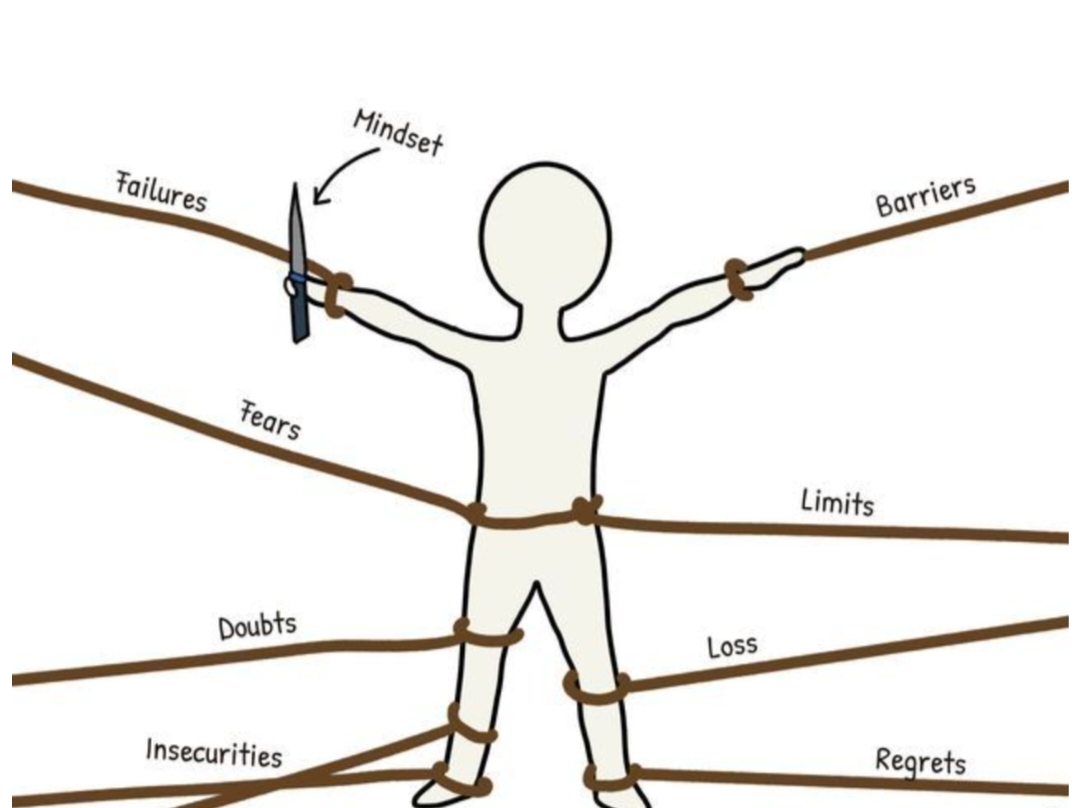
The human mind is a marvel of complexity and power, yet it operates within certain boundaries. Understanding the limits of the mind can help students unlock their potential, improve learning strategies, and foster self-awareness. This article dives deep into the fascinating aspects that define—and sometimes restrict—how the mind functions.
Table of Contents
1. Cognitive Load: Why Too Much Information Overwhelms
The brain processes information continuously, but it has a finite capacity for handling multiple tasks or large volumes of data simultaneously. Known as cognitive load, this limit affects attention, memory, and problem-solving abilities. When overwhelmed, students may struggle with retention and comprehension.
- Tip: Break study sessions into manageable chunks (Pomodoro Technique) to optimize cognitive function.
For further reading on cognitive load theory, visit Educational Psychology Interactive.
Cognitive load refers to the total amount of mental effort being used in the working memory, which has limited capacity. When students encounter too much new or complex information at once, this capacity gets overwhelmed, leading to reduced comprehension, poorer retention, and increased frustration during learning. Breaking it down into its three types—intrinsic, extraneous, and germane—helps explain why overload happens and how to manage it.

Limits of the Mind:Intrinsic Load Examples
Intrinsic load stems from the inherent complexity of the material itself, which students can’t easily change but can approach strategically.
- Learning advanced math concepts like calculus derivatives: A student new to calculus faces high intrinsic load because understanding rates of change requires grasping multiple interconnected ideas simultaneously, such as limits and slopes. Without prior algebra mastery, the brain struggles to process it all.
- Dissecting a biology cell structure: Memorizing organelles, their functions, and interactions overloads novices, as the topic demands holding dozens of details—like mitochondria’s role in energy production—in working memory at once.
Limits of the Mind:Extraneous Load Examples
Extraneous load arises from poor instructional design or distractions, wasting precious mental resources on irrelevant processing.
- PowerPoint slides packed with text while the teacher lectures: Students split attention between reading dense bullet points and listening, causing overload. For instance, a history lesson on World War II with slides full of dates, names, and quotes forces the brain to juggle redundant inputs instead of focusing on key events.
- Multitasking during study sessions: Checking social media notifications while reading a physics textbook adds extraneous load, as the brain constantly switches contexts, reducing efficiency by up to 40% and increasing errors.
- Noisy classroom environments: Background chatter during a group discussion on literature pulls focus from analyzing Shakespeare’s themes, overwhelming auditory processing and hindering deep thought.
-
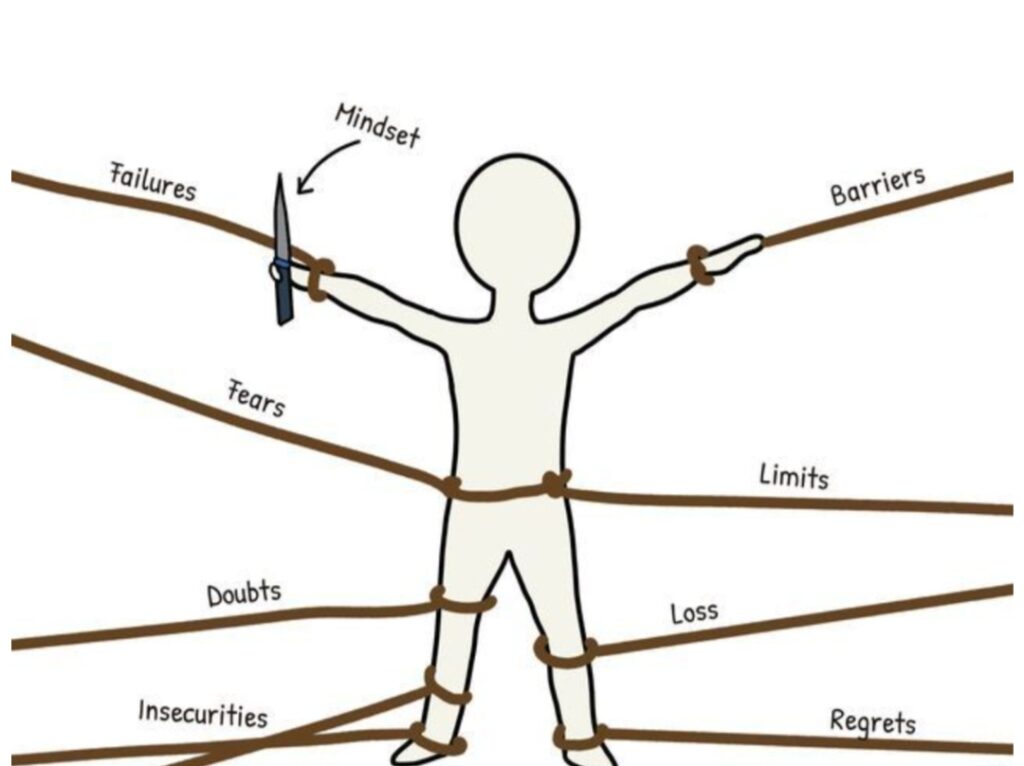
Limits of the Mind:Germane Load Examples
Germane load is the beneficial effort spent building schemas and connections, which strengthens long-term memory when balanced properly.
- Using worked examples in algebra: Instead of solving quadratic equations from scratch, studying a step-by-step solution—like factoring x2−5x+6=0 into (x−2)(x−3)=0—frees working memory for understanding the method, allowing germane load to form reusable patterns.
- Chunking vocabulary in language learning: Grouping Spanish words like “gato” (cat), “perro” (dog), and “pájaro” (bird) under an “animals” schema reduces load, enabling students to invest germane effort in sentence construction.
- How to Expand Your Comfort Zone Effortlessly: 15 Actionable Steps for Students
Limits of the Mind:Real-World Student Scenarios
Consider these everyday examples tailored for students to illustrate overload in action.
| Scenario | Load Type | Why It Overwhelms | Quick Fix |
|---|---|---|---|
| Cramming 50 history facts for a test overnight structural-learning | Intrinsic + Extraneous | Brain can’t chunk unorganized info; fatigue adds noise. | Space sessions with flashcards, 10 facts per chunk. |
| Watching educational videos with subtitles and voiceover chartered | Extraneous | Dual channels compete for attention. | Pause and note key points; use audio-only first. |
| Solving physics problems without hints education.nsw | All three | High intrinsic unmet by guidance increases extraneous waste. | Start with guided examples before independent practice. |
| Group study with off-topic chatter psychologistworld | Extraneous | Distractions fragment focus on chemistry reactions. | Set timed silent review phases. |
Limits of the Mind:Tips to Reduce Cognitive Load for Students
- Break tasks into smaller parts: Tackle one paragraph of a dense essay at a time rather than the whole chapter.
- Leverage visuals: Diagrams for geometry proofs offload verbal explanations to spatial memory.
- Practice retrieval: Quiz yourself on key terms post-reading to build germane load without overload.

2. Working Memory Constraints: The Magic Number Seven
George Miller famously suggested that working memory can hold about 7 (plus or minus 2) items at once. This limitation means students must use strategies like chunking to group information, facilitating easier recall and understanding.
Working memory holds a limited number of items at once, typically around seven plus or minus two, as identified by George Miller in his 1956 paper. This constraint, often called the “magic number seven,” explains why students struggle to juggle too many details during lectures, exams, or problem-solving, leading to errors or forgetting. Chunking information into meaningful groups helps expand this capacity effectively.
Limits of the Mind:Everyday Examples for Students
These scenarios show the magic number in action, highlighting how overload happens without strategies.
- Memorizing phone numbers: Recalling a 10-digit number like 123-456-7890 exceeds the limit unless chunked into 123-456-7890 (three groups: three, three, four digits), fitting within 7±2 chunks.
- Listing grocery items: Remembering seven items like milk, eggs, bread, apples, cheese, rice, and bananas works fine, but adding three more (juice, pasta, yogurt) causes confusion unless grouped as dairy (milk, eggs, cheese) and produce (apples, bananas).
- Recalling historical dates: Listing seven events—1066 (Battle of Hastings), 1492 (Columbus), 1776 (Declaration), 1789 (French Revolution), 1861 (Civil War start), 1914 (WWI), 1945 (WWII end)—succeeds, but 10 overwhelms without timelines or eras as chunks.
Limits of the Mind:Classroom and Study Examples
In educational settings, this limit directly impacts learning.
| Scenario | Challenge | Why 7±2 Applies | Student Fix |
|---|---|---|---|
| Note-taking in biology lecture with 12 vocabulary terms pmc.ncbi.nlm.nih | Forgetting half by session end. | Terms like “mitosis,” “photosynthesis” overload as individual items. | Chunk into processes (mitosis, meiosis) and structures (nucleus, chloroplast). |
| Solving math word problems with multiple steps utexas | Losing track mid-calculation, e.g., (5+3)×4−2÷2. | Five operations exceed span. | Write steps: add, multiply, subtract, divide (four chunks). |
| Memorizing periodic table elements psychologistworld | Recalling first 10 (H to Ne) fails easily. | Each symbol is a chunk. | Group by periods: Period 1 (H, He), Period 2 (Li to Ne). |
| Following lab instructions with 9 steps rapidbi | Skipping steps in chemistry experiments. | Sequential list overloads. | Number and visualize: 1-3 prep, 4-6 mix, 7-9 observe. |
Limits of the Mind:Advanced Insights and Chunking Strategies
Miller noted this applies to one-dimensional info, like tones or digits, but chunking recodes larger sets—e.g., turning 18 binary digits into six octal chunks. For students:
- Language learning: Treat “United States” as one chunk instead of two words.
- Exam prep: Group flashcards by theme, like physics formulas under “kinematics” (velocity, acceleration).
- Public speaking: Limit key points to five (e.g., intro, three arguments, conclusion) for smooth delivery.
3. The Illusion of Multitasking: Brain’s Single-Task Preference
Although people often believe they can multitask, the brain is primarily designed for focused, sequential attention. Switching rapidly between tasks reduces efficiency and increases errors.
- Tip: Prioritize tasks and concentrate on one activity at a time for better quality work.
The brain prefers single-task focus because true multitasking does not exist for complex cognitive activities; instead, it rapidly switches between tasks, incurring high costs in time, accuracy, and mental energy. This illusion tricks students into feeling productive while actually reducing efficiency by up to 40%, as the prefrontal cortex juggles attention switches, leading to more errors and shallower learning.
Limits of the Mind:Everyday Examples for Students
These common scenarios reveal how the brain’s task-switching masquerades as multitasking.
- Studying while checking social media: A student reads a history chapter but glances at Instagram notifications every few minutes. Each switch back to the text requires 20-30 seconds to refocus, fragmenting comprehension of key events like the Industrial Revolution.
- Listening to lectures and taking notes simultaneously: During a physics class on Newton’s laws, jotting detailed notes pulls attention from the professor’s explanations, causing missed connections between force and acceleration concepts.
- Eating lunch while watching educational YouTube videos: Chewing diverts minor resources, but reviewing math formulas mid-meal leads to poorer recall of equations like F=ma, as the brain toggles between sensory input and analysis.
Limits of the Mind:Classroom and Study Examples
Educational settings amplify the illusion, with measurable performance drops.
| Scenario | What Happens | Brain Cost | Student Fix |
|---|---|---|---|
| Answering emails during online class psychotricks | Response times slow by 50%; forgets 20% more content. | Frontoparietal network overloads on switches. | Close tabs; full-screen class mode. |
| Group project chat while writing essay pmc.ncbi.nlm.nih | Typos increase; ideas lack depth. | Working memory clears each switch. | Time-block: 25 min essay, 5 min chat. |
| Homework with background music/TV psychologicalscience | Comprehension drops 30% for verbal tasks. | Auditory competition fragments focus. | Silent environment or instrumental only. |
| Texting friends during exam review news-medical | Retention halves; confidence falsely high. | Dopamine from texts masks errors. | Phone in another room. |
Limits of the Mind:Scientific Evidence and Insights
Research using fMRI shows frontoparietal regions activate more intensely during switches, confirming heightened demands—no parallel processing occurs for demanding tasks. Pupil dilation studies link perceived multitasking to engagement boosts, yet actual output suffers from errors. Automated habits like walking pair with thinking, but studying plus scrolling does not.
Limits of the Mind:Strategies to Embrace Single-Tasking
- Pomodoro Technique: Work 25 minutes undistracted, then 5-minute break—builds focus muscle.
- Environment design: Study desk free of phones; apps block notifications during sessions.
- Prioritize ruthlessly: List top 3 tasks daily; tackle one fully before next.
4. Emotional Influence: How Feelings Shape Cognitive Capacity
Emotional states heavily impact cognitive performance. Stress and anxiety, common among students, can impair memory, concentration, and decision-making. Conversely, positive emotions enhance creativity and learning.
Emotions directly modulate cognitive capacity by influencing attention, memory consolidation, and decision-making through brain regions like the amygdala and prefrontal cortex. Negative emotions such as stress or anxiety narrow focus, impair working memory, and hinder problem-solving, while positive ones like joy broaden thinking and enhance retention. Students facing exam pressure often experience reduced performance due to this emotional override, but regulation techniques restore balance.
Limits of the Mind:Everyday Examples for Students
These relatable situations demonstrate emotions’ grip on mental performance.
- Pre-exam anxiety: A student panics over math tests, forgetting basic formulas like the quadratic equation ax2+bx+c=0, as cortisol floods the hippocampus, blocking recall despite prior mastery.
- Excitement from acing a quiz: Joy from a good grade boosts dopamine, sharpening focus for the next subject and improving vocabulary retention in language class.
- Frustration during group projects: Anger at uncooperative teammates scatters attention, leading to sloppy essay outlines instead of structured arguments.
Limits of the Mind:Classroom and Study Examples
Educational contexts amplify emotional effects, with clear performance variances.
| Scenario | Emotion Type | Cognitive Impact | Student Strategy |
|---|---|---|---|
| Homesickness in dorms during finals pmc.ncbi.nlm.nih | Negative (sadness) | Working memory drops 20%; poorer essay coherence. | Journaling to process feelings pre-study. |
| Celebration after sports win before homework frontiersin | Positive (elation) | Enhanced creativity; better science hypotheses. | Channel energy into brainstorming sessions. |
| Bullying stress impacting concentration ijhssm | Negative (fear) | Attention bias to threats; math errors rise 30%. | Breathing exercises to reset amygdala. |
| Pride from teacher praise longdom | Positive (confidence) | Broader problem-solving; faster physics solutions. | Pair with spaced repetition for gains. |
Limits of the Mind:Scientific Insights on Mechanisms
Negative emotions activate the right hemisphere and amygdala, prioritizing survival over learning, which impairs prefrontal functions for executive control. Positive states widen attentional scope via left-hemisphere dominance, fostering parallel processing and long-term potentiation for stronger memories. fMRI confirms emotional stimuli evoke stronger ERPs in centroparietal regions, modulating encoding.
Limits of the Mind:Practical Tips for Emotional Regulation
- Mood journaling: Track feelings before studying to preempt overload.
- Positive reframing: View challenges as growth opportunities to shift mindset.
- Short breaks with gratitude: List three wins to spike serotonin and refocus.
5. Neuroplasticity: The Mind’s Ability to Adapt—Within Limits
Neuroplasticity refers to the brain’s remarkable ability to reorganize itself by forming new connections. However, this adaptability has limits based on age, experiences, and individual differences.
Implication: Consistent practice and learning can expand mental capabilities, especially when started early.
Neuroplasticity enables the brain to reorganize neural pathways in response to learning, experience, or injury, allowing adaptation like skill acquisition or recovery from strokes. However, limits exist due to age, genetics, training intensity, and biological constraints, preventing unlimited change—such as fully reversing severe cognitive decline in older adults. Students can leverage this by practicing deliberately to expand capacities like focus or memory within these boundaries.
Limits of the Mind:Everyday Examples for Students
These scenarios illustrate neuroplasticity’s power and its realistic limits.
- Learning a musical instrument: A student practicing piano daily rewires auditory and motor cortices, improving finger dexterity and note recognition after months. Yet, without consistent effort, gains plateau, as adult plasticity slows compared to children under 7.
- Mastering a new language: Immersion apps like Duolingo strengthen language networks in the left temporal lobe, enabling fluency. Limits appear when overload causes burnout, capping progress at intermediate levels without real conversation practice.
Limits of the Mind:Classroom and Training Examples
Educational applications show targeted plasticity with measurable bounds.
| Scenario | Plasticity in Action | Limits Encountered | Student Strategy |
|---|---|---|---|
| Working memory training via apps like Lumosity frontiersin | Increases capacity from 4 to 6 items through n-back tasks, boosting prefrontal connectivity. | Gains transfer poorly to unrelated skills; plateaus after 20 hours. | Combine with real study; 15 min/day max. |
| Stroke recovery exercises post-injury srcd.onlinelibrary.wiley | Right hemisphere compensates for damaged left areas, restoring speech via mirror neurons. | Full recovery rare after age 65; 50% max regain. | Daily therapy + mindfulness for 3 months. |
| Exam prep with spaced repetition journals.plos | Strengthens hippocampal links for facts like history dates. | Overtraining fatigues synapses, risking forgetting curve rebound. | Review cycles: day 1, 3, 7, 30. |
| Sports visualization for athletes biorxiv | Mental rehearsals build motor maps without physical practice. | No substitute for actual reps; gains fade without maintenance. | 10 min visualization + physical drills. |
Limits of the Mind:Scientific Insights on Limits
Studies reveal neuroplasticity peaks in youth due to higher BDNF levels, with critical periods closing windows—like perfect pitch acquisition after age 12. Training induces changes via LTP (long-term potentiation), but interference from stress hormones like cortisol caps it. fMRI shows mindfulness expands insula connectivity for better focus, yet individual baselines (e.g., genetics) set ceilings.
Limits of the Mind:Practical Tips to Maximize Adaptation
- Deliberate practice: Focus on weak areas, like math proofs, for 1-hour sessions with feedback.
- Sleep and nutrition: 8 hours consolidates changes; omega-3s fuel dendrite growth.
- Variety: Alternate study methods to engage multiple networks, avoiding habituation limits.
6. Attention Span: The Shrinking Window
Modern distractions shorten attention spans, affecting study effectiveness. Research suggests that the average adult attention span has dropped to about 8 seconds, even less among younger people.
- Advice: Minimize distractions by creating a quiet, dedicated study environment.
Attention span, the duration one can sustain focus on a task, has declined significantly in recent decades, dropping from 12 seconds in 2000 to about 8 seconds today—shorter than a goldfish’s—due to digital distractions like social media and notifications. This shrinking window impairs deep learning, reading comprehension, and problem-solving for students, as constant task-switching fragments concentration and increases mental fatigue. Factors like excessive screen time exacerbate it, but targeted habits can rebuild focus.
Limits of the Mind:Everyday Examples for Students
These common situations highlight how fleeting attention derails daily productivity.
- Scrolling TikTok during homework: A student starts algebra but drifts to videos after 2 minutes, losing 30 minutes to endless feeds, forgetting the Pythagorean theorem a2+b2=c2 midway.
- Lectures with phone buzzing: Notifications from group chats pull focus every 47 seconds on average, missing key biology concepts like DNA replication steps.
- Reading textbooks amid ads: Online articles with pop-ups shorten sustained reading from 5 pages to half a page before mind wandering.
Limits of the Mind:Classroom and Study Examples
School environments reveal stark impacts on performance.
| Scenario | Attention Challenge | Real-World Effect | Student Fix |
|---|---|---|---|
| 50-minute math class pmc.ncbi.nlm.nih | Drops to 29 seconds in kids, 76 in young adults. | Forgets 25% of formulas by end. | Active note-taking with timers. |
| Online learning with tabs open pmc.ncbi.nlm.nih | Screen overload from 7+ hours daily. | 30% comprehension loss. | Single-task mode; no multitasking. |
| Group study with distractions santamaria | Chatter fragments focus. | Slower problem-solving. | 20-min silent phases. |
| Exam prep marathons apa | Vigilance decrement after 20 mins. | Error rates double. | Pomodoro: 25 mins on, 5 off. |
Limits of the Mind:Scientific Insights on Decline
Studies using continuous performance tasks show children experience 27% attention drops over sessions, linked to inattention symptoms, while adults fare better but still suffer from digital cognitive overload. Short videos train rapid shifts, rewiring dopamine circuits for novelty over depth. Age peaks young adult spans at 76 seconds before aging erodes them.
Limits of the Mind:Practical Tips to Extend Focus
- Digital detox: Set phone to Do Not Disturb during 1-hour blocks.
- Environment tweaks: Study in quiet zones; use apps like Forest to gamify focus.
- Mindfulness training: 10-minute daily meditation rebuilds prefrontal control.
7. The Role of Sleep: When the Mind Resets
Sleep is critical for memory consolidation and clearing mental fatigue. Insufficient rest reduces cognitive performance and can create long-term damage to brain functions.
Sleep serves as the brain’s primary reset mechanism, facilitating memory consolidation, clearing neural waste via the glymphatic system, and restoring cognitive functions like attention and decision-making. During slow-wave sleep (SWS), the hippocampus replays daytime experiences, transferring fragile memories to the neocortex for long-term storage, while REM sleep strengthens emotional and procedural memories. Students pulling all-nighters face up to 40% drops in learning capacity, as sleep deprivation impairs synaptic plasticity and increases error rates in tasks like problem-solving.
Limits of the Mind:Everyday Examples for Students
These scenarios show sleep’s reset power and the chaos of deprivation.
- Cramming before exams: A student studies vocabulary till 3 AM, sleeps 4 hours, then forgets 50% of words like “photosynthesis” by test time, as SWS missed prevents consolidation.
- Post-lecture nap: After a dense physics class on circuits, a 20-minute nap boosts recall of Ohm’s law V=IR by 30%, with spindles replaying lecture patterns.
- Late-night gaming: Playing till midnight cuts deep sleep, leading to foggy mornings where essay arguments on history lack coherence.
Limits of the Mind:Classroom and Study Examples
Academic routines highlight sleep’s pivotal role.
| Scenario | Sleep’s Role | Deprivation Impact | Student Fix |
|---|---|---|---|
| Night before math test pmc.ncbi.nlm.nih | SWS consolidates formulas like quadratic solving. | 35% accuracy drop; confuses x=2a−b±b2−4ac. | 8 hours; review lightly pre-bed. |
| Group project deadlines sleepfoundation | REM integrates creative ideas from discussions. | Slower brainstorming; fragmented reports. | Wind down by 10 PM with no screens. |
| Language immersion day pnas | Hippocampal replay during sleep cements phrases. | Forgetting 25% of new grammar. | Consistent 7-9 hours nightly. |
| Lab experiment recall pnas | Clears toxins for sharper analysis next day. | Heightened errors in data interpretation. | Naps after complex sessions. |
Limits of the Mind:Scientific Insights on Reset Processes
SWS triggers “active system consolidation,” where memory traces redistribute from temporary hippocampal storage to stable cortical networks, enhancing retrieval. The glymphatic system flushes beta-amyloid plaques 10x faster asleep, preventing cognitive fog. REM supports synaptic downscaling, pruning weak connections to prioritize strong ones from learning.
Limits of the Mind:Practical Tips for Optimal Reset
- Sleep hygiene: Dark room, 10 PM bedtime, no caffeine post-noon.
- Pre-sleep review: Skim notes 30 minutes before bed to cue consolidation.
- Power naps: 10-20 minutes mid-afternoon for quick boosts without grogginess.
8. Intelligence vs. Mental Limits: Navigating IQ and Creativity
Intelligence quotient (IQ) measures certain cognitive abilities but doesn’t define the entire mind’s capacity. Creativity, emotional intelligence, and practical skills show that the mind’s limits are broader and more nuanced.
ntelligence, often measured by IQ tests, quantifies logical reasoning, pattern recognition, and problem-solving speed, but it represents only one facet of mental capacity, not the full spectrum. Creativity, involving divergent thinking to generate novel ideas, operates independently, thriving on imagination and risk-taking rather than rote analysis, allowing high-creativity individuals to excel despite average IQs. Mental limits arise when over-relying on IQ ignores creativity’s role in innovation, leaving students stuck in convergent solutions while missing breakthroughs in fields like art or entrepreneurship.
Limits of the Mind:Everyday Examples for Students
These scenarios contrast IQ-driven and creative approaches, showing their interplay.
- Math homework: A high-IQ student quickly solves standard equations like 2x+3=7 using algebra rules but struggles with open-ended applications, like modeling real-world projectile motion creatively.
- Essay writing: An average-IQ writer crafts original analogies comparing climate change to a ticking bomb, outshining a high-IQ peer’s fact-heavy but predictable structure.
- Group brainstorming: The analytical student lists pros/cons efficiently (IQ strength), but the creative one proposes wild ideas like gamifying history lessons as VR quests.
Limits of the Mind:Classroom and Study Examples
Educational tasks reveal how IQ and creativity navigate limits differently.
| Scenario | IQ Approach | Creativity Approach | Combined Win |
|---|---|---|---|
| Science fair project study | Tests hypothesis with precise data on plant growth. | Invents LED-light garden from recycled materials. | Data-backed innovative prototype wins. |
| Literature analysis themanthanschool | Identifies themes via textual evidence in Shakespeare. | Reimagines Hamlet as modern social media drama. | Deeper, engaging interpretation. |
| Coding challenge pmc.ncbi.nlm.nih | Writes efficient algorithm for sorting lists. | Builds app with unique UI for puzzle-solving. | Functional, user-delightful solution. |
| Debate prep pmc.ncbi.nlm.nih | Researches facts and logic for arguments. | Crafts metaphors that sway emotions. | Persuasive, memorable delivery. |
Limits of the Mind:Limits of the Mind:Key Differences and Insights
Limits of the Mind:IQ favors convergent thinking—narrowing to the “right” answer—while creativity employs divergent thinking, exploring multiple paths, often uncorrelated beyond IQ 120, per the threshold theory. High intelligence accelerates idea generation early, but creativity sustains originality over time. Personality traits like openness boost both, yet low conscientiousness aids “impulsive creativity” in lower-IQ groups.
Limits of the Mind:Strategies for Students to Balance Both
- Divergent exercises: Brainstorm 20 uses for a paperclip daily to flex creativity.
- IQ sharpening: Tackle puzzles like Sudoku alongside freewriting.
- Integration: Use mind maps linking facts (IQ) to novel connections (creativity).
9. Sensory Overload: When the Mind Hits Its Boundary
Limits of the Mind:Excessive sensory stimuli can overwhelm the brain, causing confusion and stress. Sensory overload affects concentration and mental clarity, especially in noisy or visually cluttered environments.
Sensory overload occurs when the brain receives excessive input from sight, sound, touch, smell, or taste, overwhelming its filtering capacity and leading to cognitive shutdown, anxiety, or meltdowns. This boundary hits because the thalamus and sensory cortices can’t prioritize amid chaos, impairing focus, memory, and decision-making—especially for students in stimulating environments. Managing it involves sensory diets and breaks to restore processing equilibrium.
Limits of the Mind:Everyday Examples for Students
Limits of the Mind:These relatable triggers show overload in daily life.
- Busy cafeteria lunch: Clanging trays, overlapping chatter, bright fluorescents, and food smells bombard senses, causing a student to zone out mid-conversation, unable to track friends’ words.
- Scrolling social media feeds: Rapid image flips, notifications pings, and text walls overload visual-auditory channels, sparking irritability and abandoning homework.
- Wearing scratchy uniforms: Itchy fabrics plus backpack weight distracts during walks to class, amplifying minor stressors into full frustration.
Limits of the Mind:Classroom and Study Examples
School settings often push boundaries, with clear fallout.
| Scenario | Sensory Triggers | Cognitive Impact | Student Fix |
|---|---|---|---|
| Noisy group work in history abtaba | Multiple voices, chair scrapes, clock ticks. | Can’t process timeline events; notes jumble. | Noise-cancelling headphones for solos. |
| Computer lab with flickering screens neurodivergentinsights | Glare, fan hums, keyboard clacks. | Coding errors spike; forgets syntax like for loops. | Dim lights; blue-light filters. |
| Art class with paint fumes and textures news-medical | Strong odors, sticky brushes, crowded easels. | Loses focus on color theory sketches. | Ventilated breaks; glove preferences. |
| Exam hall buzz clevelandclinic | Coughs, paper rustles, AC drone. | Freezes on first question despite prep. | Earplugs; deep breathing routine. |
Limits of the Mind:Insights on Brain Boundaries
The brain filters 99% of sensory data unconsciously, but overload floods working memory, spiking cortisol and amygdala activity while dulling prefrontal control. Neurodiverse students (e.g., ADHD, autism) face lower thresholds due to atypical gating, turning malls or assemblies into distress zones.
Limits of the Mind:Practical Tips to Avoid Overload
- Sensory breaks: Step out for 5 minutes of quiet every hour.
- Controlled inputs: Use soft lighting, white noise apps, seamless clothes.
- Self-advocacy: Request front-row seats or flexible deadlines during peaks.
Students mastering sensory boundaries thrive amid chaos. For more, explore Sensory Overload Examples
10. The Power of Mindfulness: Expanding Mental Capacity Through Awareness
Practicing mindfulness meditation helps regulate attention, reduce stress, and improve cognitive flexibility. This mental training can gently push the limits of focus and emotional control.
- Practice tip: Start with 5 minutes of mindfulness daily and gradually increase for best results.
Mindfulness cultivates present-moment awareness without judgment, rewiring the brain to enhance attention, reduce reactivity, and expand cognitive flexibility, effectively stretching mental limits. By quieting the default mode network’s mind-wandering, it boosts working memory, emotional regulation, and focus, countering overload from the previous limits discussed. Students practicing regularly report 20-30% improvements in concentration and stress resilience, turning awareness into a tool for academic mastery.
Limits of the Mind:Everyday Examples for Students
These simple practices demonstrate mindfulness pushing boundaries.
- Before exams: A student sits for 5 minutes, focusing on breath amid rising anxiety, regaining clarity to recall biology terms like “mitochondria” without panic scattering thoughts.
- During study breaks: Noticing distractions like phone urges without acting pulls focus back to history notes, extending sessions from 10 to 25 minutes seamlessly.
- Post-argument: Observing anger toward a classmate fade through body scan releases emotional grip, freeing mental energy for evening math practice.
Limits of the Mind:Classroom and Study Examples
Integrating mindfulness amplifies learning across scenarios
| Scenario | Mindfulness Practice | Mental Expansion | Outcome |
|---|---|---|---|
| Overloaded lectures | Anchor to breath every 10 mins. | Filters noise; retains 25% more concepts. | Better notes on physics laws. |
| Group tension | Label emotions silently. | Reduces defensiveness; sparks ideas. | Collaborative essay breakthroughs. |
| Cramming fatigue | 1-min body awareness. | Clears cognitive fog; sharpens recall. | Solves stuck algebra problems. |
| Digital distractions | Mindful scrolling pause. | Reclaims attention span. | Finishes readings uninterrupted. |
Limits of the Mind:Insights on Neural Expansion
Mindfulness thickens the prefrontal cortex for executive control and shrinks the amygdala for calmer responses, fostering neuroplasticity that builds resilience against cognitive loads, multitasking illusions, and emotional drags. Short daily sessions compound, mimicking sleep’s reset by pruning irrelevant thoughts.
Limits of the Mind:Practical Tips for Students
- Start small: 5 minutes morning breath focus, building to 15.
- Anchor techniques: Use sensations like feet on floor during classes.
- Apps integration: Headspace for guided sessions tailored to study stress.
Conclusion
The limits of the mind do not define permanent barriers but guide the way we understand and enhance our mental capabilities. By recognizing these boundaries, students can adopt effective learning habits, improve emotional resilience, and unlock untapped potential to excel in academics and life.